
Commercial & Industrial Energy Storage
C&I BESS for Factories, Industrial Parks and Commercial Facilities
Quick answer: A commercial and industrial BESS is a battery energy storage system used by factories, industrial parks and commercial facilities for peak shaving, backup power, tariff optimization and renewable-energy integration. The correct kW and kWh depend on the site’s load profile, peak demand, transformer capacity, tariff structure, backup requirement, PV capacity and operating strategy.
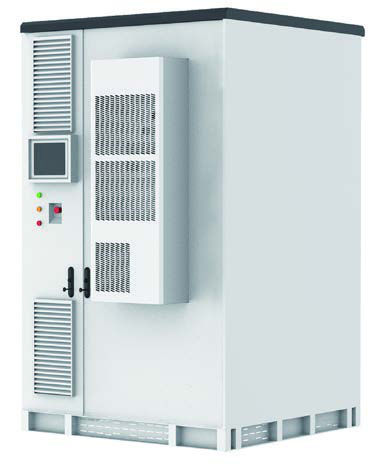
Peak Shaving
Reduce maximum demand and improve energy cost control.
Backup Power
Support critical loads during outages and weak-grid conditions.
PV Integration
Store surplus solar generation and shift clean energy to later hours.
Typical configuration inputs
Please provide site load profile, maximum demand, transformer capacity, electricity tariff structure, PV capacity if available, target backup time and installation environment. We can then prepare a project-specific battery, PCS, BMS, EMS and thermal-management configuration.
How a C&I BESS project is configured
A useful commercial energy storage proposal should match the site’s actual operating pattern instead of starting from battery capacity alone. We evaluate peak demand, daily load variation, available transformer capacity, tariff structure, outage requirements, renewable generation and installation conditions before selecting the power and energy combination.
- Battery system: sized for required energy, cycling strategy and operating reserve.
- PCS: matched to charge/discharge power, transient response and grid interface.
- BMS and EMS: coordinate protection, battery operation and site-level control logic.
- Thermal and fire protection: selected around environment, enclosure type and project requirements.
What buyers should compare
| Item | Why it matters |
|---|---|
| Rated power | Determines how much load the system can support at one time. |
| Usable energy | Determines operating duration and energy-shifting capability. |
| Control strategy | Affects peak shaving, backup behavior, PV integration and dispatch priority. |
| Site conditions | Ambient temperature, altitude, installation space and grid quality influence equipment selection. |
Simple sizing example
If a facility has a 500 kW peak load and wants roughly two hours of battery support for selected loads, the discussion starts around 500 kW of discharge power and approximately 1 MWh of usable energy. The final system may need additional installed capacity for reserve margin, depth-of-discharge limits, battery degradation, temperature and the operating strategy. That is why real load data matters more than choosing a cabinet size first.
For hybrid projects, also review Solar + BESS, Diesel + BESS and microgrid and backup power architectures.
C&I BESS FAQ
Can the system be used for both peak shaving and backup power?
Yes, when the project is designed with sufficient power, usable energy and an EMS strategy that reserves energy for backup while managing normal economic dispatch.
Can Zevonexa integrate C&I BESS with an existing PV system?
Yes. Existing PV capacity, inverter architecture, load profile and grid-export rules are reviewed when preparing the storage configuration.
Explore Capacity-Specific C&I BESS Solutions
Compare our 215kWh BESS for modular commercial projects and our 1MWh battery energy storage system for larger industrial, mining, solar-diesel and microgrid applications.
Get BESS Sizing & Quotation
Send the key project inputs below. Zevonexa will review the application, target power and energy, grid or generator conditions and prepare a project-specific response.
Get an instant preliminary kW/kWh estimate before sending the RFQ.