
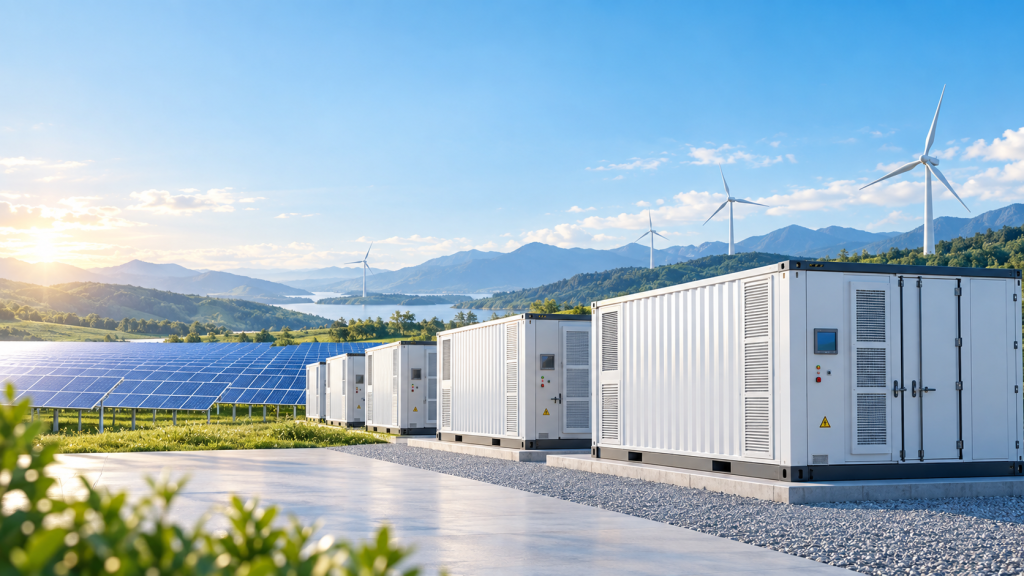
Telecom Energy Storage
Battery Backup and Hybrid Power for Telecom Sites
Quick answer: Telecom BESS is used to provide backup autonomy, reduce diesel-generator runtime and integrate solar at base stations and remote network sites. The correct battery size depends on continuous load, required backup hours, outage frequency, voltage architecture, temperature and available charging sources.
Typical objectives
- Longer backup duration during utility outages
- Solar-assisted remote telecom power
- Reduced diesel generator runtime and maintenance
- Stable DC/AC power architecture for network equipment
- Remote-site microgrid integration
What to send us
Provide site power demand, voltage architecture, required autonomy, grid outage profile, genset information, available PV area and environmental conditions. We can prepare a suitable storage and hybrid-power configuration.
Design priorities for telecom backup power
Telecom sites usually require predictable autonomy, high availability and minimal maintenance. The storage configuration should match site power demand, outage frequency, voltage architecture, ambient temperature and any available PV or generator assets.
- Provide defined backup duration for network equipment and auxiliary loads.
- Reduce generator starts and runtime at remote sites.
- Use solar generation where site conditions allow.
- Support distributed sites with consistent equipment and control logic.
Telecom sizing checklist
| Input | Why it matters |
|---|---|
| Continuous site load | Defines the base power requirement. |
| Required autonomy | Determines usable battery energy. |
| Grid outage profile | Helps set reserve strategy and generator coordination. |
| Site temperature | Influences thermal management and expected operating conditions. |
Telecom Backup Power FAQ
Can solar be added to a telecom battery backup system?
Yes. Available PV area, site load, battery autonomy target and grid or generator conditions are considered when configuring a solar-assisted telecom power system.
What determines battery autonomy at a telecom site?
Autonomy depends on the continuous and peak load, usable battery energy, temperature, reserve policy, conversion losses, battery aging and whether PV or a generator can recharge the system during an extended outage.
How should telecom backup power be sized?
Telecom backup power should be sized from the actual continuous site load, required autonomy, battery voltage architecture, outage duration, recharge window and ambient temperature. A practical first-pass energy estimate is continuous load × backup hours, then adjusted for usable depth of discharge, conversion losses, temperature derating and reserve margin. Sites with repeated outages may also need enough charging power to restore battery capacity before the next outage.
When does a telecom site need a hybrid power system?
A telecom hybrid power system becomes useful when grid availability is poor or diesel runtime is high. Battery storage can carry the base load during short outages, absorb fast load changes, store solar energy and allow a diesel generator to run closer to an efficient loading point instead of idling for long periods. For remote sites, review our Diesel + BESS and Microgrid & Backup approaches.
Can solar and batteries support telecom base stations?
Yes. Where solar resource and site area are suitable, PV can reduce grid or generator energy consumption while the battery smooths production and supplies the telecom load when solar output is low. The final design depends on the daily load profile, PV production, battery autonomy target and generator or grid availability. See Solar + BESS for the wider hybrid architecture.
What project data should be included in a telecom RFQ?
Provide the DC or AC load, nominal voltage, peak and continuous demand, required backup hours, outage frequency, grid condition, generator rating, PV capacity if any, site temperature range, communications protocol and installation location. Those inputs determine usable battery energy, PCS or rectifier requirements, reserve margin and control strategy.